CompTIA Data+ (DA0-002) — Free Practice Questions
10 free sample questions from a bank of 298, with the correct answers and explanations. No signup required — start practising right now.
- Anonymization
- Role-based access control
- Encryption
- Masking
The short version
C — Encryption makes data unreadable without the required key. It transforms plaintext with an algorithm and key, so only holders of the key can restore usable content.
Key concepts in this question
- Encryption mechanics: Uses symmetric or asymmetric keys to produce ciphertext that resists reading without the matching secret.
- Anonymization contrast: Removes identifiers to prevent reidentification, but does not use a reversible key for authorized access.
- Access control contrast: Role-based rules decide who may reach data, yet data remains readable if bypassed or copied.
- Masking contrast: Hides parts of values for display, often irreversibly in nonproduction, without key-based restoration.
Why C is correct
Only encryption ties unreadability to possession of a specific key, satisfying the stem exactly. Decryption reverses the transform for authorized users while others see ciphertext. That key-dependent reversibility is the settled discriminator.
Why the others are wrong
- A. Anonymization is wrong because it strips identifiers rather than enforcing key-based unreadability.
- B. Role-based access control is wrong because it governs permissions, not cryptographic transformation of the data itself.
- D. Masking is wrong because it obscures display values without requiring a key for reversal.
DA0-002 exam tip
Hear without a required key and choose encryption instantly, reserving masking for display hiding and anonymization for identifier removal.
- Show a mock-up to the team.
- Explain the desired level of reporting detail.
- Present an analysis of the data.
- Find out the project due date.
The short version
A — Show a mock-up to the team after initial requirements. Early visuals validate metrics, layout and row-level security understanding before full build effort.
Key concepts in this question
- Reporting deck workflow: Moves from requirements to prototype to feedback to production, reducing rework on complex dashboards.
- Mock-up value: Demonstrates grain, visuals and security behavior cheaply, surfacing gaps in metric definitions.
- Premature analysis trap: Presenting insights before confirming the visual contract risks answering the wrong question.
- Scope timing: Due dates and detail explanations matter, but validation of the visual approach comes first after requirements.
Why A is correct
The deck must combine tracking, visualization and security, which are easy to misinterpret from text alone. A mock-up lets stakeholders confirm calculations, filters and access behavior early. That prototype-first discipline makes showing a mock-up the settled next action.
Why the others are wrong
- B. Explain reporting detail is wrong because discussion without a visual still leaves layout and interaction ambiguous.
- C. Present analysis is wrong because delivering findings precedes agreement on what the deck should show.
- D. Find due date is wrong because scheduling does not validate that requirements were understood correctly.
DA0-002 exam tip
After requirements, think prototype for validation, so mock-up beats analysis or scheduling when metrics plus security must be confirmed.
- Standardization
- Concatenate
- Binning
- Appending
The short version
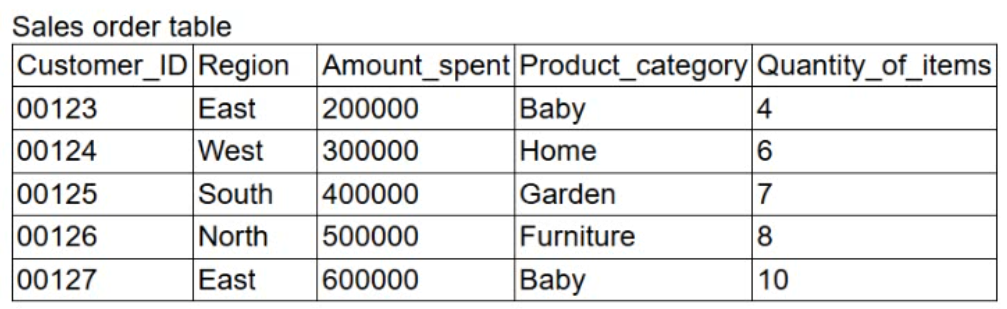
C — Binning segments customers by spending behavior. Grouping continuous amounts into ranges creates analyzable cohorts from one million order rows.
Key concepts in this question
- Binning method: Places numeric values into intervals such as low, medium and high spend for comparison.
- Segmentation goal: Reveal behavioral cohorts for targeting, rather than preserving every distinct amount.
- Standardization contrast: Rescales values for modeling comparability, but does not create spending groups.
- Concatenate and append contrast: Combine fields or rows structurally without forming behavioral segments.
Why C is correct
The team needs cohorts based on spending, which requires converting raw totals into meaningful bands. Binning reduces cardinality while preserving order for aggregation. That grouping function is the settled technique for this segmentation task.
Why the others are wrong
- A. Standardization is wrong because scaling aids algorithms, it does not group customers into spend bands.
- B. Concatenate is wrong because joining columns creates composite keys, not behavioral cohorts.
- D. Appending is wrong because stacking rows increases volume without segmenting spend.
DA0-002 exam tip
Map segment-by-spending to binning, normalize-for-model to standardization, and combine-data to join or append.
- Gender
- Driver’s license
- Age
- Employment status
The short version
B — Driver license disclosure is a privacy violation. It is direct government identification that enables identity theft when exposed publicly.
Key concepts in this question
- PII definition: Data that alone or combined identifies a person and triggers breach duties when disclosed.
- Direct identifiers: License numbers, passport numbers and similar credentials uniquely link to an individual.
- Quasi-identifiers: Gender, age and employment status describe groups and usually need combination to identify someone.
- Violation trigger: Public release of a direct identifier without consent or authority breaches privacy obligations.
Why B is correct
A driver license number uniquely identifies its holder and supports fraud if misused, so publication violates privacy rules. Gender, age and employment status are demographic attributes that rarely identify alone. That direct-identifier status makes driver license the settled violation.
Why the others are wrong
- A. Gender is wrong because it is a broad demographic trait, not a unique identifier warranting violation alone.
- C. Age is wrong because it describes a cohort and needs additional data to single out a person.
- D. Employment status is wrong because it is general workforce information without unique linkage.
DA0-002 exam tip
Sort identifiers into direct versus quasi, then pick the government ID or unique number whenever the stem asks what alone violates privacy.
- Parsing
- Scaling
- Compressing
- Deriving
The short version
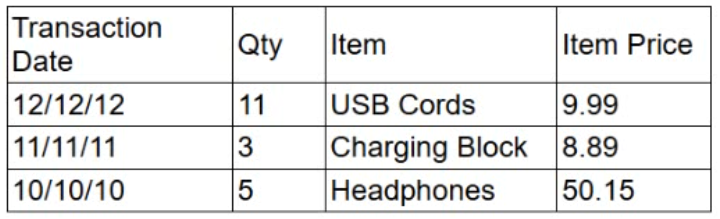
D — Deriving calculates total cost per transaction. Creating a new field from quantity times price produces the required measure without altering grain.
Key concepts in this question
- Derived fields: Computed columns such as extended cost that enrich analysis while preserving row detail.
- Parsing contrast: Splits or extracts parts of strings, useful for dates or codes, not for arithmetic totals.
- Scaling contrast: Adjusts magnitude for comparability, but does not combine multiple inputs into a total.
- Compressing contrast: Reduces storage footprint, unrelated to calculating transaction economics.
Why D is correct
Total cost requires arithmetic across existing columns for each row, which is the textbook use of deriving. The result supports summation and margin work downstream. Because no other method creates a computed total, deriving is the settled method.
Why the others are wrong
- A. Parsing is wrong because extracting substrings cannot multiply quantity by price.
- B. Scaling is wrong because rescaling changes range, it does not produce a transaction total.
- C. Compressing is wrong because storage reduction leaves values uncombined for analysis.
DA0-002 exam tip
Link new calculated measure to deriving, text splitting to parsing, and size reduction to compressing for fast method picks.
- Subquery
- Aggregate
- Union
- Join
The short version
A — Subquery refines selection from a second table efficiently. A nested SELECT filters or feeds values to the outer query without manual staging.
Key concepts in this question
- Subquery pattern: Inner query returns keys or thresholds that the outer WHERE or SELECT consumes in one statement.
- Join contrast: Merges columns horizontally, powerful but heavier when only filtering by another table is needed.
- Aggregate contrast: Summarizes groups, useful for metrics, but not for passing a refined set between tables.
- Union contrast: Stacks compatible result sets vertically, unrelated to selective refinement.
Why A is correct
Using one table to refine another is exactly what a subquery expresses, keeping logic in a single efficient statement. The optimizer can push predicates and avoid materializing wide joins. That focused filtering role makes subquery the settled most efficient way.
Why the others are wrong
- B. Aggregate is wrong because summarization alone does not pass a refined key set to another table.
- C. Union is wrong because stacking rows adds volume rather than narrowing selection.
- D. Join is wrong because it is broader than needed when the goal is refinement, and the key favors the lighter nested approach.
DA0-002 exam tip
Choose subquery for use-one-table-to-filter-another, join for combine-columns, and union for stack-rows in DA0-002 SQL stems.
- Transformations
- Data lineage
- Syntax
- Variable types
The short version
B — Data lineage is found in metadata. Lineage records source, movement and transforms, explaining where data came from and how it changed.
Key concepts in this question
- Metadata scope: Data about data, including definitions, ownership, quality rules and history.
- Lineage content: Source systems, pipelines, business rules applied, and destination consumption points.
- Transformation execution contrast: Actual logic runs in pipelines, while metadata describes that logic for governance.
- Syntax and type contrasts: Code grammar and storage types aid development, but lineage answers provenance.
Why B is correct
Lineage is textbook metadata because it documents flow rather than holding business values. Auditors and stewards use it to trace issues to origins. That descriptive-about-flow nature places lineage squarely in metadata as settled.
Why the others are wrong
- A. Transformations are wrong because executable logic itself is processing, only its description lives in metadata.
- C. Syntax is wrong because language rules enable coding, they are not provenance documentation.
- D. Variable types are wrong because storage definitions support engineering, not history of movement.
DA0-002 exam tip
Ask what describes versus what does, since lineage, definitions and ownership describe and therefore live in metadata.
- Virtualization
- Version control
- Continuous integration
- Containerization
The short version
D — Containerization moves isolated apps across environments. Packaging code with dependencies into portable images ensures consistent runs from laptop to cloud.
Key concepts in this question
- Container model: Namespaced processes sharing the host kernel with declared libraries, isolated yet lightweight.
- Portability benefit: Same image runs wherever a runtime exists, removing works-on-my-machine drift.
- Virtualization contrast: Emulates full machines with guest operating systems, heavier and less focused on app portability.
- Version and CI contrasts: Track code history and automate builds, but do not encapsulate runtime isolation.
Why D is correct
Only containers bundle application plus dependencies into a transferable unit that starts identically in multiple environments. Virtual machines can move too, but with greater overhead and machine-level scope. For isolated application transfer, containerization is the settled answer.
Why the others are wrong
- A. Virtualization is wrong because full-machine images are heavier and not the lightest app-isolation transfer method.
- B. Version control is wrong because it tracks source changes without packaging runtime execution.
- C. Continuous integration is wrong because it automates testing and merging, not portable isolated deployment.
DA0-002 exam tip
Pair isolated plus portable with containers, full-machine with virtualization, and history with version control.
- Make an announcement on social media so customers are aware as soon as possible.
- Tell the company management team and then tell regulatory agencies.
- Keep the incident a secret until the issue is resolved.
- Inform the entire IT sector, but ask for discretion.
The short version
B — Notify management then regulators after a breach. Internal escalation triggers containment and counsel, followed by timely agency notice per legal duties.
Key concepts in this question
- Incident sequence: Detect, escalate, contain, investigate, notify authorities and affected parties, then remediate.
- Management role: Authorizes resources, engages legal, and approves external communications.
- Regulatory duty: Many regimes require prompt breach reporting with scope, impact and mitigation steps.
- Improper paths: Social announcements, secrecy or broad informal disclosure create liability and confusion.
Why B is correct
Management must know first to coordinate forensics and legal review, then regulators receive required notice within mandated windows. That order balances control with compliance. Skipping either step risks penalties and harm, making the two-stage notice the settled action.
Why the others are wrong
- A. Social media announcement is wrong because uncontrolled publicity harms investigation and violates notification protocols.
- C. Keep secret is wrong because concealment breaches legal duties and erodes trust when discovered.
- D. Inform IT sector informally is wrong because broad disclosure without authority spreads risk and lacks regulatory standing.
DA0-002 exam tip
Recall escalate inward then notify outward through proper channels, never social first and never secret, for breach response stems.
- Fact
- Dimensional
- Bridge
- Snowflake
The short version
B — Region table is dimensional. It holds descriptive attributes for slicing sales facts, such as names and hierarchies for grouping.
Key concepts in this question
- Dimensional role: Stores who, what and where context used for filtering and grouping measures.
- Fact contrast: Transaction tables hold numeric measures and foreign keys at event grain.
- Bridge and snowflake contrasts: Bridge resolves many-to-many links and snowflake normalizes dimensions, neither the base descriptive role.
- Star pattern: Central facts join to denormalized dimensions like region for fast analytics.
Why B is correct
Analyzing sales by region requires a descriptive side table joined to sales events, which is the definition of a dimension. It supplies labels and hierarchies for aggregation. That slice-and-group function makes dimensional the settled classification.
Why the others are wrong
- A. Fact is wrong because facts record measurable events, not regional descriptors.
- C. Bridge is wrong because bridges handle multi-valued links, not primary regional description.
- D. Snowflake is wrong because it is a normalized modeling style, not the table role itself.
DA0-002 exam tip
Remember facts equal measures and events while dimensions equal descriptions for slicing, so by-region analysis means region is dimensional.
Want the full bank of 298 questions for CompTIA Data+ (DA0-002)? See all practice exams.