CompTIA CySA+ (CS0-004) — Free Practice Questions
10 free sample questions from a bank of 470, with the correct answers and explanations. No signup required — start practising right now.
- TTP provides useful insights on the hash values and internet protocol addresses attributed to an attacker.
- TTP provides useful insights on an attacker's indicators of compromise.
- TTP provides useful insights on the tools used by an attacker.
- TTP provides useful insights on the strategy and behavior of an attacker.
The short version
D — D values behaviour over hashes and IPs correctly. TTPs reveal attacker strategy and behaviour beyond atomic indicators. Tactics, techniques, and procedures describe how an adversary operates across the kill chain, including goals, methods, and decision patterns, which remain useful even when hashes and IP addresses change.
Key concepts in this question
- TTP level: TTPs sit above atomics and tools in the pyramid of pain, forcing adversaries to change behaviour rather than just infrastructure.
- Atomic volatility: Hashes and IPs are easily replaced, so strategies built only on them decay fast and miss novel infrastructure.
- Defensive use: Behavioural models inform analytics, playbooks, and threat hunting that survive indicator churn.
Why D is correct
Tactics, techniques, and procedures describe how an adversary operates across the kill chain, including goals, methods, and decision patterns, which remain useful even when hashes and IP addresses change. Indicators like hashes and IPs are volatile atomics that rotate quickly, while tools alone do not explain intent or sequencing. The settled key therefore follows defensive doctrine that behavioural insight drives resilient detections and hunting.
Why the others are wrong
- A. focuses on hashes and IP addresses, which are low-level atomics with short shelf life compared to behavioural insight.
- B. focuses on indicators of compromise generally, which are still atomic observables rather than strategy and behaviour.
- C. focuses on tools used, which are more stable than hashes but still below strategic behaviour in defensive value.
CS0-004 exam tip
Rank defensive value as TTPs above tools above indicators for any pyramid question.
- Legacy systems
- Degraded functionality
- Asset obfuscation
- Proprietary server
The short version
A — A justifies segmentation for legacy assets correctly. legacy systems cannot accept modern controls so isolation compensates. Legacy business-critical systems often run unsupported operating systems and unpatchable services that cannot host current agents or encryption.
Key concepts in this question
- Legacy risk: Unsupported stacks lack patches and modern authentication, making network containment the primary safeguard.
- Segmentation effect: Isolation with strict allow-lists blocks east-west movement even if the legacy host is compromised.
- Criticality driver: Business-critical status raises impact, justifying strong segmentation cost for fragile assets.
Why A is correct
Legacy business-critical systems often run unsupported operating systems and unpatchable services that cannot host current agents or encryption. Heavily segmenting them limits lateral movement and confines exploitation blast radius without requiring changes to the fragile host. Degraded functionality, obfuscation, and proprietary labels do not by themselves mandate segmentation as strongly as unpatchable legacy risk, so the settled key follows compensating-control logic.
Why the others are wrong
- B. cites degraded functionality, which describes performance, not the security inability that forces segmentation.
- C. cites obfuscation, which hides assets but does not contain compromise like segmentation does.
- D. cites proprietary server, which describes ownership rather than patchability and control gaps.
CS0-004 exam tip
Hear legacy plus critical and choose segmentation as compensating containment.
- CyberChef
- Wireshark
- Zeek
- Open Cyber Threat Intelligence (OpenCTI)
The short version
A — A picks the decoding and extraction workbench correctly. CyberChef extracts patterned strings like IPv4 from unstructured text. CyberChef provides recipes for finding and transforming patterned data, including regular-expression extraction of IPv4 addresses from free text, plus decoding and refanging in one workspace.
Key concepts in this question
- Extraction recipe: Find-and-replace plus regex extractors pull dotted quads from prose without writing scripts.
- Unstructured input: APT reports arrive as narrative text, needing a text workbench rather than a packet decoder.
- Workflow fit: Analysts paste, extract, validate, and pivot to enrichment directly from the same CyberChef session.
Why A is correct
CyberChef provides recipes for finding and transforming patterned data, including regular-expression extraction of IPv4 addresses from free text, plus decoding and refanging in one workspace. Wireshark and Zeek analyze packet captures and network logs rather than free-form reports, while OpenCTI manages already structured intelligence. The settled key therefore follows tool-purpose mapping for ad-hoc IoC extraction.
Why the others are wrong
- B. names Wireshark, which dissects captured packets rather than mining narrative threat reports for addresses.
- C. names Zeek, which generates connection logs from traffic rather than extracting IoCs from documents.
- D. names OpenCTI, which stores and correlates structured IoCs after extraction instead of performing the extraction itself.
CS0-004 exam tip
Map unstructured text plus extract IPs to CyberChef instantly.
- Industrial control systems use significant network bandwidth.
- Outage windows are usually scheduled.
- Traditional IT security solutions may not be compatible.
- OT devices are typically not encrypted.
The short version
C — C explains OT compensating controls correctly. OT cannot host IT agents so compensating controls bridge the gap. Operational technology devices run real-time controllers with fragile timing and vendor certification constraints, so traditional IT endpoint agents, active scanning, and reboot-heavy patching may break safety or availability.
Key concepts in this question
- Safety constraint: Control loops demand determinism, so intrusive IT tooling risks physical process disruption.
- Compatibility gap: Agents and scanners built for IT operating systems often lack OT builds or vendor approval.
- Compensation pattern: Perimeter and monitoring controls surround the device when host controls are infeasible.
Why C is correct
Operational technology devices run real-time controllers with fragile timing and vendor certification constraints, so traditional IT endpoint agents, active scanning, and reboot-heavy patching may break safety or availability. Compensating controls such as network segmentation, unidirectional gateways, and monitored jump access provide equivalent protection without touching the controller. Bandwidth, outage windows, and encryption status are secondary, so the settled key follows OT security doctrine.
Why the others are wrong
- A. cites bandwidth use, which does not explain why host security tooling is incompatible with controllers.
- B. cites scheduled outage windows, which describe maintenance timing rather than tool incompatibility.
- D. cites lack of encryption, which is one symptom but not the general compatibility reason for compensation.
CS0-004 exam tip
Link OT plus compensating controls to incompatible IT solutions, not bandwidth.
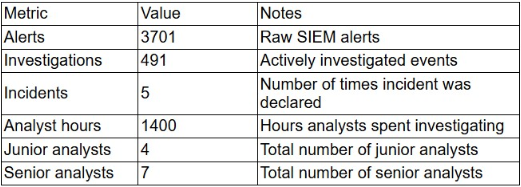
- Leverage a cloud security posture management tool to add asset context to alerts.
- Analyze and tune the detections that are causing non-actionable alerts.
- Implement playbooks for the junior analysts to use during investigations.
- Perform internal incident training on the most common alerts from security information and event management (SIEM).
The short version
B — B improves SOC efficiency by tuning noisy detections correctly. tuning noisy non-actionable detections cuts alert fatigue fastest. When metrics show high volume of non-actionable alerts, the highest-leverage fix is to analyze and tune the detections generating them, adjusting thresholds, allow-lists, and logic to raise precision.
Key concepts in this question
- Non-actionable load: False positives consume triage cycles and bury true positives, directly lowering operational efficiency.
- Tuning lever: Threshold, suppression, and correlation changes cut noise at the source with compounding time savings.
- Efficiency metric: Mean time to triage and actionable rate improve fastest when the noisiest rules are fixed first.
Why B is correct
When metrics show high volume of non-actionable alerts, the highest-leverage fix is to analyze and tune the detections generating them, adjusting thresholds, allow-lists, and logic to raise precision. Adding context tools, playbooks, or training helps downstream handling but does not reduce the upstream noise causing inefficiency. The settled key therefore follows alert-triage economics that prioritize signal quality first.
Why the others are wrong
- A. adds asset context via posture management, which enriches alerts but leaves the noisy detection logic firing.
- C. adds playbooks for juniors, which standardizes handling yet still processes the same inflated queue.
- D. trains on common SIEM alerts, which helps analysts cope but does not reduce the underlying false-positive rate.
CS0-004 exam tip
Hear non-actionable alerts plus efficiency and choose tune the detections.
- Sinkholing
- Eradication techniques
- Continuous monitoring
- Evidence acquisition
The short version
C — C sustains protection during zero-day exposure correctly. continuous monitoring compensates until a zero-day patch exists. For an unpatched zero-day with published IoCs, continuous monitoring for exploit signs, anomalous behaviour, and IoC hits provides interim risk reduction while the vendor prepares a fix.
Key concepts in this question
- Zero-day gap: No vendor fix means prevention cannot rely on patching, shifting priority to early detection and containment.
- Monitoring role: Hunting IoCs plus behaviour analytics shortens dwell time and triggers isolation before damage spreads.
- Technique fit: Interim measures must be reversible and non-disruptive, which monitoring satisfies better than premature eradication.
Why C is correct
For an unpatched zero-day with published IoCs, continuous monitoring for exploit signs, anomalous behaviour, and IoC hits provides interim risk reduction while the vendor prepares a fix. Sinkholing targets DNS-based command and control, eradication assumes access already gained, and evidence acquisition preserves forensics without preventing exploitation. The settled key therefore follows interim-control guidance that emphasizes watchfulness until patching is possible.
Why the others are wrong
- A. selects sinkholing, which helps only for DNS-resolved infrastructure and is not the general zero-day holdover.
- B. selects eradication, which removes established footholds but does not prevent initial zero-day exploitation.
- D. selects evidence acquisition, which supports investigation yet does not actively reduce exposure while awaiting patch.
CS0-004 exam tip
Pair zero-day plus no patch with continuous monitoring as the holdover.
- Secure access service edge
- Next-generation firewall
- Zero Trust
- Privileged access management
The short version
C — C names continuous access validation correctly. continuous verification of every access defines Zero Trust. Zero Trust assumes no implicit trust by network location and requires continuous validation and verification of identity, device, and context for each access to production.
Key concepts in this question
- Never trust: Location inside the network grants no standing privilege under Zero Trust; each request is evaluated.
- Continuous check: Session risk, device posture, and behaviour feed ongoing authorization rather than one-time login.
- Production fit: High-value production access benefits most from per-request verification and least-privilege scoping.
Why C is correct
Zero Trust assumes no implicit trust by network location and requires continuous validation and verification of identity, device, and context for each access to production. Secure access service edge, next-generation firewall, and privileged access management are enabling architectures or controls, but only Zero Trust names the practice of never trusting and always verifying. The settled key therefore follows identity-centric doctrine.
Why the others are wrong
- A. names secure access service edge, which is a converged network-security architecture, not the validation practice itself.
- B. names next-generation firewall, which enforces at boundaries but does not define continuous identity verification.
- D. names privileged access management, which secures admin accounts as one pillar rather than the whole model.
CS0-004 exam tip
Translate continuously validate every access to Zero Trust on sight.
- Usage policies
- Prompt engineering
- Non-disclosure agreement
- Incident response policy
The short version
A — A enables controlled AI adoption correctly. usage policies govern safe AI use while protecting objectives and data. Usage policies define approved AI tools, allowed data classes, prompt handling, and review duties, letting staff leverage AI forms while safeguarding objectives and sensitive data.
Key concepts in this question
- Policy scope: AI usage policies state what may be entered, which tools are allowed, and how outputs must be validated.
- Risk balance: Clear guardrails unlock productivity while preventing data leakage and unreviewed decisions.
- Control hierarchy: Technical and legal tools support the policy but do not replace day-to-day usage rules.
Why A is correct
Usage policies define approved AI tools, allowed data classes, prompt handling, and review duties, letting staff leverage AI forms while safeguarding objectives and sensitive data. Prompt engineering improves outputs, non-disclosure agreements bind third parties legally, and incident response guides post-event handling, but only usage policies proactively steer everyday AI behaviour. The settled key therefore follows governance design.
Why the others are wrong
- B. names prompt engineering, which crafts better inputs and outputs but does not enforce organizational data protection.
- C. names non-disclosure agreement, which creates legal duty yet lacks operational AI usage guidance.
- D. names incident response policy, which reacts after harm rather than enabling safe ongoing use.
CS0-004 exam tip
Link leverage AI safely to usage policies, not prompt tricks.
- Encrypted web requests and Domain Name System (DNS) traffic
- Unencrypted web requests and DNS traffic
- Neither encrypted nor unencrypted web and DNS traffic
- Both encrypted and unencrypted web and DNS traffic
The short version
B — B reads the tshark display filter correctly. http filter shows cleartext web while udp shows DNS transport. The filter http or udp keeps packets dissected as http, which is unencrypted web traffic, plus packets using UDP transport, which in practice surfaces DNS queries and responses.
Key concepts in this question
- HTTP versus TLS: Lowercase http matches cleartext web transactions, while TLS or ssl would be needed for encrypted sessions.
- UDP role: DNS primarily rides UDP, so the udp clause captures name-resolution traffic alongside web requests.
- OR logic: The OR operator unions both match sets, showing unencrypted web plus DNS rather than requiring both.
Why B is correct
The filter http or udp keeps packets dissected as http, which is unencrypted web traffic, plus packets using UDP transport, which in practice surfaces DNS queries and responses. Encrypted web uses TLS rather than http dissection, so it is excluded, and the OR logic includes both sides rather than neither or both encrypted forms. The settled key therefore follows display-filter protocol semantics.
Why the others are wrong
- A. claims encrypted web plus DNS, but encrypted sessions dissect as TLS, not http, so they are filtered out.
- C. claims neither type appears, contradicting that both http and udp packets satisfy the OR condition.
- D. claims both encrypted and unencrypted web, but the http token alone does not include TLS-encrypted flows.
CS0-004 exam tip
Read tshark http as cleartext only and udp as the DNS carrier for this pattern.
- Hybrid cloud networks
- Secure access service edge
- Cloud-native computing
- Content delivery networks
The short version
B — B implements perimeter-less topology correctly. secure access service edge delivers perimeter-less zero-trust access. Secure access service edge converges software-defined perimeter, zero-trust network access, and cloud security into identity-aware access without a fixed network edge.
Key concepts in this question
- Perimeter-less idea: Access decisions follow identity and posture per session instead of inside-versus-outside network zones.
- SASE blend: Networking plus security as a service enforces policy close to users and apps wherever they reside.
- Topology contrast: Other options optimize placement or delivery but retain implicit network trust boundaries.
Why B is correct
Secure access service edge converges software-defined perimeter, zero-trust network access, and cloud security into identity-aware access without a fixed network edge. Hybrid cloud, cloud-native computing, and content delivery networks describe hosting or performance patterns rather than a perimeter-less access architecture. The settled key therefore follows modern network design mapping.
Why the others are wrong
- A. names hybrid cloud, which mixes on-premises and cloud hosting but does not by itself remove perimeter trust.
- C. names cloud-native computing, which describes build patterns like containers rather than access topology.
- D. names content delivery networks, which accelerate content distribution instead of defining access trust.
CS0-004 exam tip
Hear perimeter-less and choose secure access service edge directly.
Want the full bank of 470 questions for CompTIA CySA+ (CS0-004)? See all practice exams.