ServiceNow Certified Implementation Specialist - IT Service Management (CIS-ITSM) — Free Practice Questions
10 free sample questions from a bank of 303, with the correct answers and explanations. No signup required — start practising right now.
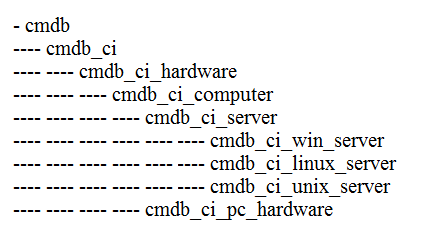
- Just CIs defined directly in cmdb_ci_computer
- CIs defined directly in cmdb_ci_computer and all parent classes
- CIs defined directly in cmdb_ci_computer and all child classes
The short version
C — report on cmdb_ci_computer includes that class plus all child classes. CMDB class queries roll downward through extension, never upward.
Key concepts in this question
- CMDB hierarchy: configuration item classes extend base tables, with computers as parents of more specific device types.
- Child class inheritance: records in laptop or server extensions are logically also computer records for query purposes.
- Parent exclusion: querying a child does not pull parents, while querying a parent pulls its descendants.
- Direct versus inherited: direct means stored at that exact table level, inherited means contributed by extensions.
- Reporting scope: platform reports against a table automatically include rows from extended tables.
Why C is correct
C is correct because ServiceNow CMDB reporting against cmdb_ci_computer returns CIs defined directly in that table and all child classes that extend it. Extension means a server or workstation record exists as a computer plus specialization, so it qualifies for the parent report. Parent classes above computer are broader abstractions and are not pulled by a child level query. The settled scope therefore includes direct plus children, matching platform inheritance behavior.
Why the others are wrong
- A. Wrong because limiting to direct only ignores extension inheritance that automatically adds child CIs.
- B. Wrong because parent classes sit above the queried table and are never included when reporting downward.
CIS-ITSM exam tip
Parent report equals self plus children: remember down not up when choosing CMDB report scope.
- Internal/External Highlighting
- Search as User
- Show User Viewable
- User Only View
The short version
B — Search as User shows agents what callers can actually see. It previews knowledge visibility through the caller lens on the Incident form.
Key concepts in this question
- Knowledge visibility: access controlled by criteria, roles, and user conditions that differ between agents and callers.
- Search as User: feature rendering results both as current user and as specified user such as the caller.
- Incident sharing risk: agents see internal technical articles that must not be sent to end users with simpler needs.
- Highlighting versus preview: color hints help, but only dual perspective search proves caller visibility.
- Fictitious labels: show user viewable and user only view style names are not the platform capability.
Why B is correct
B is correct because Search as User lets agents from the Incident form see knowledge results as themselves and as the caller at once. That dual view proves which mature internal technical articles stay hidden and which simple end user articles are safe to share. It directly satisfies the need to identify caller visible content before sending. Other labels do not exist as features, and highlighting alone does not test access as the other identity.
Why the others are wrong
- A. Wrong because internal plus external highlighting is not the platform feature that tests caller perspective.
- C. Wrong because show user viewable is not a real capability for dual identity knowledge preview.
- D. Wrong because user only view is not a real feature and cannot demonstrate caller access from Incident.
CIS-ITSM exam tip
Need to know what caller sees from Incident: choose Search as User for dual perspective proof.
- Edit cart layout
- Enable wish list
- Enable cart save
- User partial save
The short version
B — Enable wish list lets users save partial requests for later. Wish list holds incomplete carts until ready to submit.
Key concepts in this question
- Catalog property: global or catalog level switch enabling shopper conveniences across items.
- Wish list: saved collection of not yet submitted requests that can be completed and ordered later.
- Cart layout editing: controls columns and presentation of the cart, not persistence of drafts.
- Cart save wording: plausible but not the platform property name for draft retention.
- Partial save phrasing: describes the goal in words, not the configured property that delivers it.
Why B is correct
B is correct because the Enable wish list catalog property allows users to save partially completed requests to complete and submit at a later time. It creates a durable draft holding selected items and variables until the shopper returns. Editing cart layout changes display, while similarly worded save options are distractors without platform effect. The settled property name is the documented switch for deferred completion.
Why the others are wrong
- A. Wrong because edit cart layout changes visible columns, but does not persist incomplete requests.
- C. Wrong because enable cart save sounds correct but is not the platform property for wish list drafts.
- D. Wrong because user partial save is descriptive phrasing, not the catalog property that enables the behavior.
CIS-ITSM exam tip
Partial request plus later equals wish list: layout edits display, wish list persists drafts.
- Processes
- Flows
- Procedures
- Actions
- Scripts
The short version
B — Flows determine approvals and tasks after a catalog item is requested. Modern request fulfillment runs on Flow Designer logic.
Key concepts in this question
- Flow Designer: low code automation that defines approvals, tasks, notifications, and branching for requests.
- Catalog item trigger: requesting an item launches its associated flow to orchestrate fulfillment.
- Processes wording: generic term that does not name the platform mechanism.
- Procedures and actions: steps or reusable pieces within a flow, not the governing mechanism itself.
- Scripts: custom code that can support flows, but not the declarative driver of approvals and tasks.
Why B is correct
B is correct because once a catalog item has been requested, Flows determine the approvals and tasks triggered in the application. The item points to a flow that evaluates variables, requests approvals, creates catalog tasks, and handles outcomes. Processes, procedures, actions, and scripts may describe parts or legacy concepts, but the current mechanism that owns end to end fulfillment is the flow. The settled key reflects that platform direction.
Why the others are wrong
- A. Wrong because processes is too generic and does not identify Flow Designer orchestration.
- C. Wrong because procedures describe documentation rather than executable approval and task logic.
- D. Wrong because actions are reusable flow components, not the overall determining mechanism.
- E. Wrong because scripts can extend behavior, but flows govern the approval and task generation.
CIS-ITSM exam tip
Requested item plus approvals plus tasks equals Flows: scripts and actions only assist.
- itil
- task_worker
- sc_fulfiller
- catalog_fulfiller
- fulfiller
The short version
A — itil is the default fulfiller role for request work. Unless special security demands otherwise, fulfillers carry itil.
Key concepts in this question
- Fulfiller work: completing catalog tasks, updating requests, and moving fulfillment toward closure.
- itil role: baseline role granting task and request fulfillment access across ITSM applications.
- task_worker and fulfiller wording: descriptive labels that are not the assigned platform role name.
- sc_fulfiller and catalog_fulfiller: plausible names that do not match the default fulfillment grant.
- Least privilege exception: particular security needs may narrow roles, but default remains itil.
Why A is correct
A is correct because users performing request fulfillment work are given the itil role unless particular security requirements dictate otherwise. That role is called the fulfiller role in practice and unlocks task assignment, state updates, and related fulfillment actions. The other names either describe the function in words or invent scoped roles that are not the platform default. The settled practice keeps itil as the standard grant for fulfillment.
Why the others are wrong
- B. Wrong because task_worker describes work but is not the default platform role for fulfillers.
- C. Wrong because sc_fulfiller is an invented scoped name, not the baseline fulfillment role.
- D. Wrong because catalog_fulfiller sounds specific but is not the default grant for request work.
- E. Wrong because fulfiller alone is descriptive, while the actual role name is itil.
CIS-ITSM exam tip
Default fulfiller equals itil: other fulfiller sounding names are distractors unless security narrows.
- Knowledge Item
- Record Producer
- Content Item
- Order Guide
- Catalog Item
The short version
C — Content Item delivers the Getting Started link without fulfillment. Informational catalog entries use content, not request flow.
Key concepts in this question
- Content Item: catalog entry presenting information such as links and articles, creating no request or task.
- Getting Started need: link to a knowledge article guiding construction request documentation.
- Catalog Item: requestable entry generating approvals and fulfillment tasks for the construction itself.
- Record Producer: form creating a table record such as incident, inappropriate for pure guidance.
- Order Guide and Knowledge Item: bundle ordering or article storage concepts, not the informational catalog slot.
Why C is correct
C is correct because the Getting Started item must contain a link to a knowledge article and should not trigger fulfillment. A Content Item satisfies that by rendering content and links directly in the catalog without creating requests. The construction request itself uses a Catalog Item with approvals and tasks, while record producers create records and order guides bundle multiple items. Only content cleanly separates guidance from fulfillment.
Why the others are wrong
- A. Wrong because knowledge item is not the catalog type for link based guidance entries.
- B. Wrong because record producer creates a table record, overkill for an informational link.
- D. Wrong because order guide bundles multiple request items, not a single guidance link.
- E. Wrong because catalog item would create fulfillment work where only information is wanted.
CIS-ITSM exam tip
Link plus guidance with no tasks equals Content Item: request work always means Catalog Item.
- Order a set of Dishes
- Order a Custom Automobile
- Order a Technical Consultation
- Order a Couch
- Order a case of Laundry Soap
The short version
B — custom automobile is the strong Order Guide example. Configurable bundles with choices need guided ordering.
Key concepts in this question
- Order Guide: catalog construct bundling multiple related items with rules and options into one request experience.
- Custom automobile: many interdependent choices for model, options, and packages that benefit from guided selection.
- Simple goods: dishes, couch, or soap are single items better served by individual catalog items.
- Consultation: single service engagement that does not require bundling logic.
- Bundle value: order guides reduce shopper effort when combinations matter.
Why B is correct
B is correct because ordering a custom automobile involves selecting among many dependent items and options that must work together. An Order Guide presents those choices in sequence, applies rules, and generates the correct set of underlying requests. Dishes, couches, soap, or a single consultation lack that combinatorial complexity and are handled by plain catalog items. The settled example highlights configurable complexity as the guide use case.
Why the others are wrong
- A. Wrong because dishes are a simple set better ordered as catalog items without guide rules.
- C. Wrong because a technical consultation is a single service, not a bundle needing guided combination.
- D. Wrong because a couch is a single product choice, not a ruled multi item bundle.
- E. Wrong because laundry soap by the case is bulk single item ordering, not guided configuration.
CIS-ITSM exam tip
Complex configurable bundle equals Order Guide: single goods equal Catalog Item.
- On the Cart Layout, Columns tab, unselect Quantity column
- On the Catalog Item, Columns tab, unselect Quantity column
- On the Catalog Item, Advanced View, unselect Use cart layout, select No quantity
- On the Catalog, Advanced View, unselect Use cart layout, select No quantity
- On the Catalog Item, Cart Layout Related List, set the Quantity record to Inactive
The short version
C — per item cart control lives on Catalog Item Advanced View with No quantity. Unchecking Use cart layout exposes quantity options for that item only.
Key concepts in this question
- Per item override: cart behavior can vary by catalog item rather than globally for all items.
- Advanced View: item form section exposing cart options such as no cart, no quantity, no order, and checkout handling.
- Use cart layout: when enabled, global layout applies; when cleared, item level quantity choices appear.
- No quantity: option hiding the quantity field for items where count makes no sense like VPN access.
- Global versus item scope: catalog or cart layout changes affect many items, not only VPN.
Why C is correct
C is correct because adjusting cart layout for only the VPN item requires opening that Catalog Item, Advanced View, clearing Use cart layout, and selecting No quantity. That scope limits the change to VPN while leaving other items untouched. Editing global cart layouts or catalog level settings would hide quantity everywhere, while columns tabs and inactive records do not provide the item scoped quantity switch. The settled path is the documented per item cart option.
Why the others are wrong
- A. Wrong because cart layout columns change affects all items using that layout, not VPN only.
- B. Wrong because catalog item columns tab is not the cart quantity control location.
- D. Wrong because catalog advanced view would broaden scope beyond the single VPN item.
- E. Wrong because inactivating a quantity record is not the supported per item quantity switch.
CIS-ITSM exam tip
One item cart change equals Catalog Item plus Advanced View plus No quantity, never global layout.
- Build report on SC Task table, Group by Variables for Computer > Extra memory
- Build report on Requested Item table, Group by Variables for Computer > Extra memory
- Build report on Task table, Group by Variables for Computer > Extra memory
- Build report on Request table, Group by Variables for Computer > Extra memory
- Build report on Catalog Item table, Group by Variables for Computer > Extra memory
The short version
B — report on Requested Item grouped by Computer variables answers the memory question. RITM holds item variables for analysis.
Key concepts in this question
- Requested Item table: stores each catalog item request instance with its variables and states.
- Variables grouping: grouping by Computer plus Extra memory splits base versus add on counts.
- SC Task granularity: tasks track fulfillment pieces, not the clean per request variable comparison.
- Request and Catalog Item levels: too high or master data levels without per order variable values.
- Task generality: base Task table lacks the request variable context needed for the comparison.
Why B is correct
B is correct because building the report on the Requested Item table and grouping by variables for Computer greater than Extra memory directly counts how many Computer requests included extra memory versus base memory. RITM rows carry the submitted variables, so grouping yields the desired comparison. Task tables fragment the view into fulfillment steps, while Request and Catalog Item tables do not hold the per order variable answers. The settled source is RITM for variable based request reporting.
Why the others are wrong
- A. Wrong because SC Task tracks fulfillment work, not the clean per request variable split.
- C. Wrong because base Task is too generic and lacks catalog variable context.
- D. Wrong because Request aggregates multiple items without per item variable detail.
- E. Wrong because Catalog Item is master definition data, not submitted request variables.
CIS-ITSM exam tip
Variable comparison across requests equals RITM plus Group by Variables, not Task or Request.
- Record Producer
- Order Guide
- Linked Item
- Catalog Item
- Content Item
The short version
A — Record Producer creates an Incident from an Ask a Question form. It maps simple questions into table records without full catalog flow.
Key concepts in this question
- Record Producer: simplified catalog interface that generates a single table record such as incident.
- Ask a Question pattern: lightweight intake where answers populate incident fields directly.
- Catalog Item: fuller request with variables, flows, approvals, and tasks, heavier than needed here.
- Order Guide: multi item bundling construct, unnecessary for one incident record.
- Content and Linked Items: informational or reference constructs that do not create incident records.
Why A is correct
A is correct because an Ask a Question form that generates an Incident is the textbook Record Producer use case. The producer presents a few prompts and inserts the incident with mapped fields, bypassing request plus task orchestration. Catalog Items would add fulfillment overhead, order guides would bundle unneeded items, and content types create no records. The settled type matches lightweight record creation.
Why the others are wrong
- B. Wrong because order guide bundles multiple request items, not a single incident intake.
- C. Wrong because linked item is not the incident creating record type.
- D. Wrong because catalog item adds flows and tasks beyond simple Ask a Question needs.
- E. Wrong because content item presents information but creates no incident record.
CIS-ITSM exam tip
Ask a Question plus create Incident equals Record Producer, never full Catalog Item.
Want the full bank of 303 questions for ServiceNow Certified Implementation Specialist - IT Service Management (CIS-ITSM)? See all practice exams.