Certified Ethical Hacker (CEH) — Free Practice Questions
10 free sample questions from a bank of 398, with the correct answers and explanations. No signup required — start practising right now.
- IDEA
- Triple Data Encryption Standard
- AES
- MD5 encryption algorithm
The short version
B — 64-bit blocks with three 56-bit keys is Triple DES. The settled key matches the classic three-key construction and its effective strength.
Key concepts in this question
- Block size: Triple DES retains the DES 64-bit block, unlike AES which uses 128-bit blocks.
- Three-key model: K1, K2, and K3 each contribute 56 effective bits, applied as encrypt-decrypt-encrypt.
- Effective strength: three-key mode offers about 112 bits of security due to meet-in-the-middle limits, not 168.
- IDEA contrast: International Data Encryption Algorithm uses 64-bit blocks but a single 128-bit key.
- Hash contrast: MD5 is a hash producing a 128-bit digest, not a block cipher with keys.
Why B is correct
B is correct because only Triple Data Encryption Standard is defined as three DES operations over 64-bit blocks with three independent 56-bit keys. That exact keying description appears in standards and course material for 3DES. The question wording mirrors the formal definition, so no other listed algorithm fits both block and key facts.
Why the others are wrong
- A. IDEA uses 64-bit blocks but a single 128-bit key, not three 56-bit keys.
- C. AES uses 128-bit blocks with 128, 192, or 256-bit keys, never 64-bit blocks.
- D. MD5 is a hashing algorithm with no encryption keys or 64-bit block structure.
312-50 exam tip
Memorize 3DES as 64-56-3: 64-bit block, 56-bit keys, 3 keys in EDE mode.
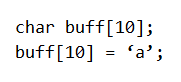
- SQL injection
- Buffer overflow
- CSRF
- XSS
The short version
B — long encoded input probing memory bounds signals buffer overflow. The settled key reads the firewall log pattern as an oversized-payload attempt.
Key concepts in this question
- Buffer overflow: sending more data than a buffer holds to overwrite adjacent memory and alter execution.
- Firewall log clues: repeated long strings, NOP sleds, and shellcode fragments point to overflow probes.
- SQL injection contrast: uses quotes, UNION, and comment markers to manipulate backend queries.
- XSS contrast: injects script tags to execute in a victim browser rather than crash server memory.
- CSRF contrast: tricks an authenticated browser into issuing unwanted requests without injecting payloads.
Why B is correct
B is correct because the observed log shows an attacker submitting abnormally long or binary-heavy input typical of boundary-testing for overflow conditions. Web-application firewall signatures flag that shape as buffer-overflow exploitation rather than query or script syntax. In CEH taxonomy, such memory-corruption probing belongs squarely to the buffer-overflow category.
Why the others are wrong
- A. SQL injection would show SQL keywords and meta-characters, not sheer payload length.
- C. CSRF relies on forged cross-site requests, not malformed field content.
- D. XSS requires script execution markers aimed at browsers, absent here.
312-50 exam tip
If the log shows overlong input without SQL or script tags, choose buffer overflow.
- Insider threat
- Diversion theft
- Spear-phishing sites
- Advanced persistent threat
The short version
D — quiet long-term stealth for sensitive theft is APT behavior. The settled key captures persistence without sabotage as the hallmark.
Key concepts in this question
- Advanced persistent threat: a prolonged, targeted campaign using stealth, lateral movement, and exfiltration.
- Dwell time: APT actors remain undetected for months, prioritizing access retention over immediate damage.
- Insider contrast: requires a trusted internal actor misusing legitimate access, not external intrusion.
- Diversion theft contrast: a physical or logistics trick diverting deliveries, not network persistence.
- Phishing contrast: often the initial entry vector, but not the name for the whole long campaign.
Why D is correct
D is correct because remaining in the network undetected for a long time while collecting sensitive data without sabotage matches the formal APT definition. The scenario emphasizes duration, stealth, and intelligence gathering over disruption. CEH maps that combination directly to advanced persistent threat rather than a single-stage attack.
Why the others are wrong
- A. insider threat needs a malicious insider, while John is an external hacker.
- B. diversion theft concerns misdirected goods, not network intrusion.
- C. spear-phishing sites describe lures, not sustained stealth presence.
312-50 exam tip
Think APT equals low and slow: long dwell plus quiet theft without breakage.
- nmap -A - Pn
- nmap -sP -p-65535 -T5
- nmap -sT -O -T0
- nmap -A --host-timeout 99 -T1
The short version
C — slow full-connect scan of common ports is quietest for IDS evasion. The settled key balances stealth timing with default port coverage.
Key concepts in this question
- Nmap timing templates: T0 and T1 are paranoid and sneaky, inserting long delays to avoid thresholds.
- Connect scan: sT completes the TCP handshake and is slower but less suspicious than raw SYN tricks on some monitors.
- OS detection: O adds probes but is bundled here as part of the credited quiet profile.
- Aggressive modes: A enables version, script, and traceroute noise that trips IDS quickly.
- Ping sweep contrast: sP only checks liveness and does not perform the requested port scan.
Why C is correct
C is correct because nmap sT with T0 uses full TCP connects at the slowest timing, spreading common-port probes so IDS correlation stays below alert levels. It avoids the loud service and script engines of aggressive scans while still covering the requested ports. In CEH logic, that combination is taught as the least-noise option among the listed choices.
Why the others are wrong
- A. aggressive scan with OS and scripts is loud and easily detected.
- B. ping sweep plus full port range at T5 is fast and noisy, opposite of stealth.
- D. aggressive scan with short host timeout remains signature-rich despite slower timing.
312-50 exam tip
For least noise pick the slowest timing: T0 beats T1, and plain connect beats aggressive.
- WPA3-Personal
- WPA3-Enterprise
- WPA2-Enterprise
- WPA2-Personal
The short version
B — 192-bit minimum with GCMP-256 and 384-bit curves is WPA3-Enterprise. The settled key reflects the strict Suite-B class protection level.
Key concepts in this question
- WPA3 modes: Personal uses SAE passwords while Enterprise adds 802.1X authentication and stronger suites.
- 192-bit security suite: mandates GCMP-256 encryption, HMAC-SHA384 integrity, and 384-bit elliptic curves.
- GCMP-256: Galois Counter Mode with 256-bit keys for high-throughput authenticated encryption.
- ECDSA P-384: elliptic-curve signatures with 384-bit keys for robust authentication strength.
- WPA2 contrast: older suites centered on AES-CCMP-128 and lacked the 192-bit minimum option.
Why B is correct
B is correct because only WPA3-Enterprise defines an optional 192-bit minimum-strength mode using exactly GCMP-256, HMAC-SHA384, and ECDSA with a 384-bit curve for sensitive networks. That suite aligns with CNSA requirements for government and finance. The question lists those primitives verbatim, making Enterprise the unique match.
Why the others are wrong
- A. WPA3-Personal uses SAE and 128-bit suites, not the 192-bit enterprise suite.
- C. WPA2-Enterprise tops out at 128-bit CCMP without GCMP-256 or P-384 mandates.
- D. WPA2-Personal uses pre-shared keys and weaker suites, far from 192-bit minimum.
312-50 exam tip
Link 192-bit plus GCMP-256 directly to WPA3-Enterprise 192-bit mode.
- httpd.conf
- administration.config
- php.ini
- idq.dll
The short version
C — verbose PHP errors come from php.ini misconfiguration. The settled key points to the PHP interpreter config as the info-leak source.
Key concepts in this question
- php.ini role: central PHP settings for error display, logging, and exposure of version details.
- Verbose errors: display_errors and error_reporting left on in production leak paths and SQL fragments.
- httpd.conf contrast: Apache main config controls modules and virtual hosts, not PHP error verbosity.
- Rare files contrast: administration.config and idq.dll are narrow Microsoft artifacts, not general web error sources.
- Hacker value: leaked paths, library versions, and stack traces guide targeted exploitation.
Why C is correct
C is correct because php.ini directly governs whether PHP prints stack traces and warnings to browsers, so a misconfigured production value exposes internals. CEH teaches php.ini alongside overly verbose errors as a classic reconnaissance aid. The other files do not control PHP error output in the same direct way.
Why the others are wrong
- A. httpd.conf tunes Apache itself, not PHP error display.
- B. administration.config is IIS administration scope, not general PHP leakage.
- D. idq.dll is an old indexing component, not a common error-message source.
312-50 exam tip
Hear verbose PHP errors and immediately answer php.ini with display_errors disabled.
- Towelroot
- Knative
- zANTI
- Bluto
The short version
D — automated DNS zone and Whois harvesting points to Bluto. The settled key matches DNS footprinting with zone-transfer enumeration.
Key concepts in this question
- DNS footprinting: gathering domain names, name servers, records, and IP mappings before deeper attacks.
- Zone data: AXFR attempts and enumerations reveal hosts, mail exchangers, and text records.
- Whois correlation: registrar and netblock data complements DNS for target profiling.
- Bluto function: an automated reconnaissance tool marketed for DNS discovery and footprinting workflows.
- Distractor tools: rooting utilities, serverless platforms, and mobile testing tools lack DNS zone features.
Why D is correct
D is correct because the scenario describes an automated tool retrieving DNS zone data, domain names, computer names, IP addresses, records, and Whois in one pass. That footprinting bundle is the documented purpose of Bluto in CEH material. The other options have no comparable DNS enumeration role, leaving Bluto as the only fitting employment.
Why the others are wrong
- A. Towelroot is an Android root exploit, not a DNS enumerator.
- B. Knative is a serverless platform, unrelated to zone transfers.
- C. zANTI is a mobile pentest toolkit focused on local network attacks, not DNS zones.
312-50 exam tip
Link DNS zone plus Whois automation to Bluto on sight.
- Hashcat
- John the Ripper
- THC-Hydra
- netcat
The short version
D — netcat moves bytes but does not crack hashes. The settled key separates password crackers from a raw network utility.
Key concepts in this question
- Hash cracking: dictionary, brute-force, and rule-based guessing against captured password hashes.
- Hashcat capability: GPU-accelerated cracker supporting hundreds of hash modes and attack types.
- John the Ripper capability: classic CPU cracker with wordlists and incremental modes.
- Hydra nuance: primarily an online login guesser, but grouped here with guessing tools rather than pure networking.
- Netcat role: a TCP and UDP Swiss-army tool for banners, shells, and transfers without cracking logic.
Why D is correct
D is correct because netcat can connect, listen, and relay data yet contains no hash-mode engine, wordlist mangling, or guess verification. After gaining hashes, a tester needs offline cracking, which netcat cannot perform. The settled key therefore marks the non-cracking utility as the not-useful choice.
Why the others are wrong
- A. Hashcat is purpose-built for hashed-password cracking and is useful.
- B. John the Ripper is purpose-built for hash cracking and is useful.
- C. THC-Hydra performs password guessing workflows and is grouped as useful here.
312-50 exam tip
If the task is crack hashes, eliminate netcat and keep Hashcat and John.
- [inurl:]
- [info:]
- [site:]
- [related:]
The short version
D — related finds sites similar to a target URL. The settled key tests Google dorking vocabulary for similarity search.
Key concepts in this question
- Google operators: special keywords that constrain results by site, URL text, metadata, or relationship.
- related operator: returns pages Google considers similar in topic or linkage to the given URL.
- inurl contrast: finds the term inside page URLs rather than judging similarity.
- site contrast: restricts results to a specific domain instead of finding peers.
- info contrast: shows cached summary information about one URL rather than peers.
Why D is correct
D is correct because related is documented to list websites similar to the specified target, which directly supports competitor and footprint expansion. An attacker uses it to pivot from one known site to lookalikes for further profiling. No other listed operator performs similarity matching, making related unique.
Why the others are wrong
- A. inurl searches within URLs and does not assess similarity.
- B. info presents data about a URL instead of similar sites.
- C. site limits scope to one domain instead of finding similar domains.
312-50 exam tip
Memorize related as similar and site as confined to one domain.
- Reconnaissance
- Weaponization
- Command and control
- Exploitation
The short version
B — building a malicious payload is weaponization. The settled key places client-side backdoor creation in the second kill-chain phase.
Key concepts in this question
- Cyber kill chain order: reconnaissance, weaponization, delivery, exploitation, installation, command and control, actions.
- Weaponization meaning: coupling an exploit with a payload into a deliverable artifact such as a trojan document.
- Reconnaissance contrast: harvesting emails is prior collection, but crafting the backdoor moves beyond it.
- Exploitation contrast: triggering the vulnerability on the victim happens after delivery, not during building.
- Command and control contrast: persistent beaconing occurs only after successful installation.
Why B is correct
B is correct because creating a client-side backdoor to send via email combines exploit and payload into a weapon before any delivery or detonation. The scenario explicitly states harvesting is done and construction is underway. That construction stage is the textbook definition of weaponization in Lockheed Martin kill-chain teaching.
Why the others are wrong
- A. reconnaissance was the email harvesting, now completed before backdoor building.
- C. command and control requires an active implant beacon, not yet established.
- D. exploitation needs the victim to open the artifact, which has not occurred.
312-50 exam tip
Chain mnemonic is weaponize before you deliver: build equals weaponization.
Want the full bank of 398 questions for Certified Ethical Hacker (CEH)? See all practice exams.