1z0-149 — Free Practice Questions
10 free sample questions from a bank of 88, with the correct answers and explanations. No signup required — start practising right now.
1Which two PL/SQL elements can be deprecated using the DEPRECATE pragma? (Choose two.)
- PACKAGES
- VARIABLES
- ANONYMOUS BLOCK
- TRIGGER BODY
- DATABASE LINKS
Answer:
2Which three are valid PL/SQL variable names? (Choose three.)
- printer_name#
- 1to7number
- yesterday's_date
- leap$year
- Number_of_days_between_March_and_April
- #printer_name
- v_fname
Answer:
3Which two are true about collections and RECORD types? (Choose two.)
- A variable of RECORD type can contain fields of another RECORD type or any collection type.
- Only associative arrays and nested tables can have elements of RECORD type.
- All collections and RECORD types can be defined in PL/SQL blocks, packages, or at the schema level.
- Collections and RECORD types are always dense.
- All collections and RECORD types can be stored in table columns.
- VARRAYS, nested tables and each field in %ROWTYPE type variables have a default value of null.
Answer:
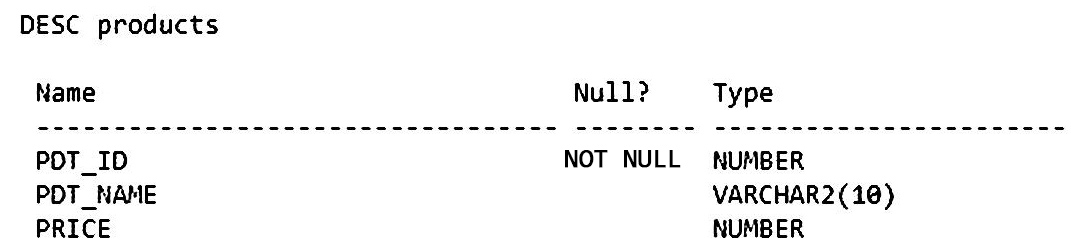
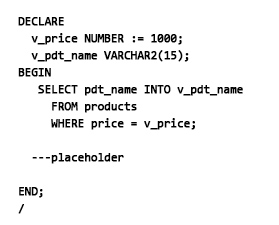
4Examine this table in the SH schema: User SH executes this code: The program must terminate with a user-defined message and no rows displayed if more than one product's price is 1000.
With which option must “---placeholder” be replaced?
Answer:
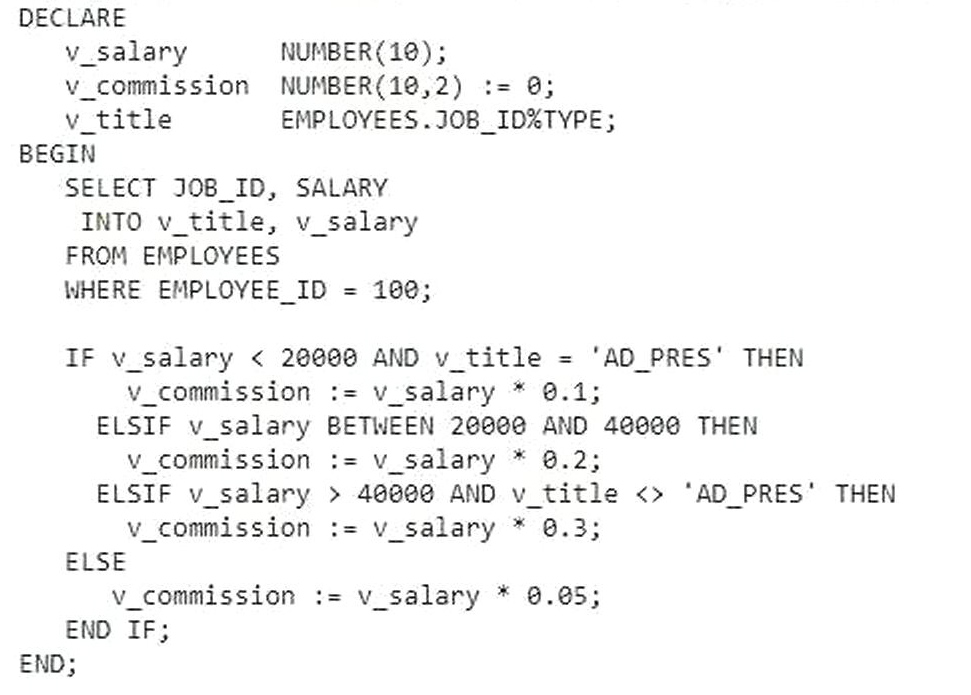
5Examine this row of data from the EMPLOYEES table: Now, examine this block of code which executes successfully: What is the value of v_commission?

- 5000
- 15000
- 2500
- 10000
Answer: C
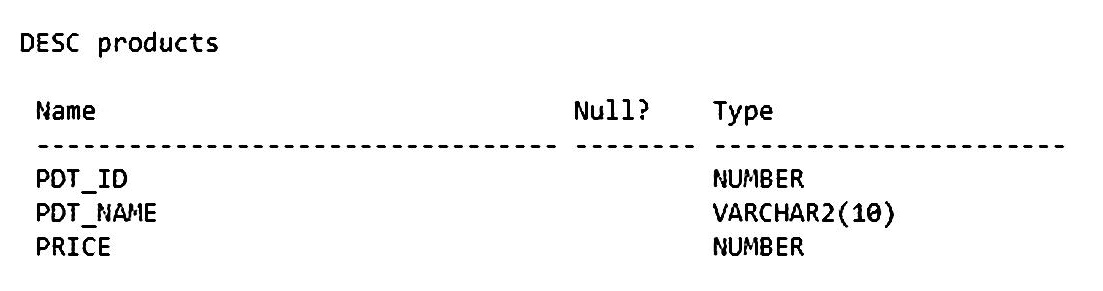
6Examine this table in the SH schema: Now, examine this code: Which two changes are required to ensure that PDT_REPORT executes successfully? (Choose two.)
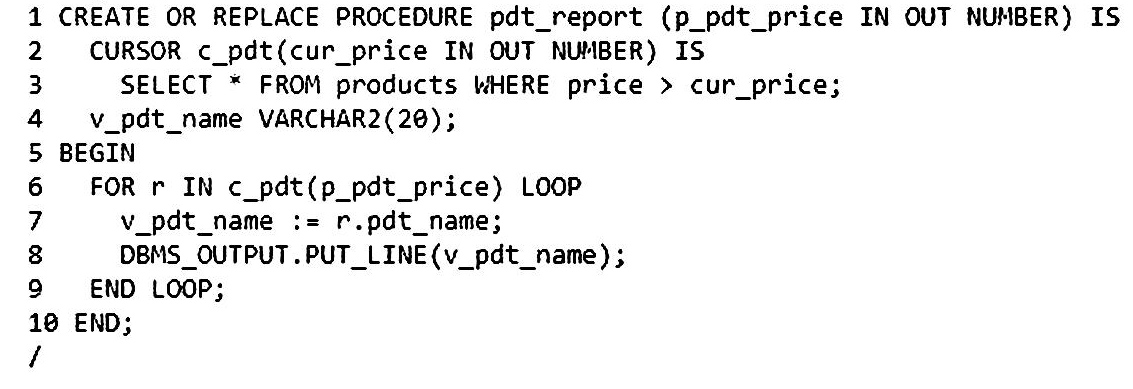
- In line 1, change IN OUT mode to IN mode.
- In line 2, change IN OUT mode to IN mode.
- In line 3, replace CUR_PRICE with P_PDT_PRICE in the query condition.
- In line 1, add the default parameter DEFAULT 2000.
- In line 6, replace P_PDT_PRICE parameter name with CUR_PRICE.
- In line 2, add the default parameter DEFAULT 2000.
Answer:
7User ORA41 executes these statements successfully: Now, examine this statement which is executed successfully by user ORA61 after a successful login:
EXECUTE ora41.update_emp_proc(100,25000);
Which two are true? (Choose two.)
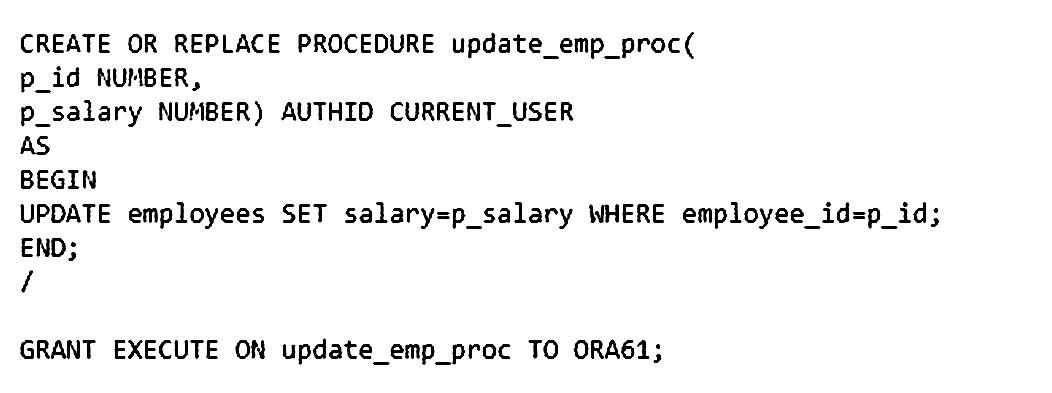
- The salary will be changed for employee 100 in the EMPLOYEES table owned by ORA41.
- No update happens even though the procedure executes successfully.
- The salary will be changed for employee 100 in the EMPLOYEES table owned by ORA61.
- The UPDATE privilege on ORA41.EMPLOYEES is not inherited by ORA61 through the procedure.
- ORA61 will have been granted the UPDATE privilege explicitly on ORA41.EMPLOYEES before executing the statement.
Answer:
8Which two are true about exception handling? (Choose two.)
- Internally defined exceptions can be handled only by the OTHERS exception handler.
- All declared exceptions are raised implicitly by the runtime system.
- User-defined exceptions can be defined in the declarative part of any PL/SQL anonymous block, subprogram, or package.
- Only predefined exceptions and user-defined exceptions can have a user-declared name associated with them.
- Predefined exceptions are globally declared in the standard package.
Answer:
9Examine these statements: Which is true?
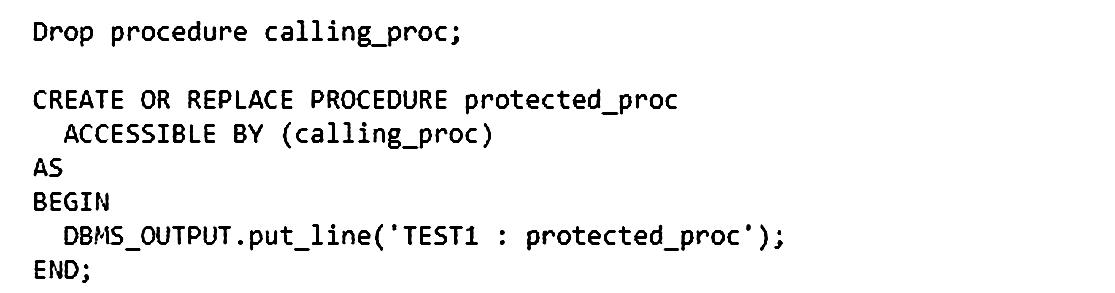
- It will result in a compilation error for protected_proc because calling_proc does not exist.
- It will result in a compilation error for protected_proc because calling_proc must be prefixed with the schema name.
- It will result in a successful compilation because objects referenced in an ACCESSIBLE BY clause are not checked at compile time.
- With adequate privileges, PROTECTED_PROC procedure can be called by other programs apart from CALLING_PROC.
Answer: C
10Examine the EMPLOYEES table structure: Now, examine this code: Which statement is true about the result of executing this block?
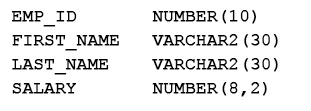
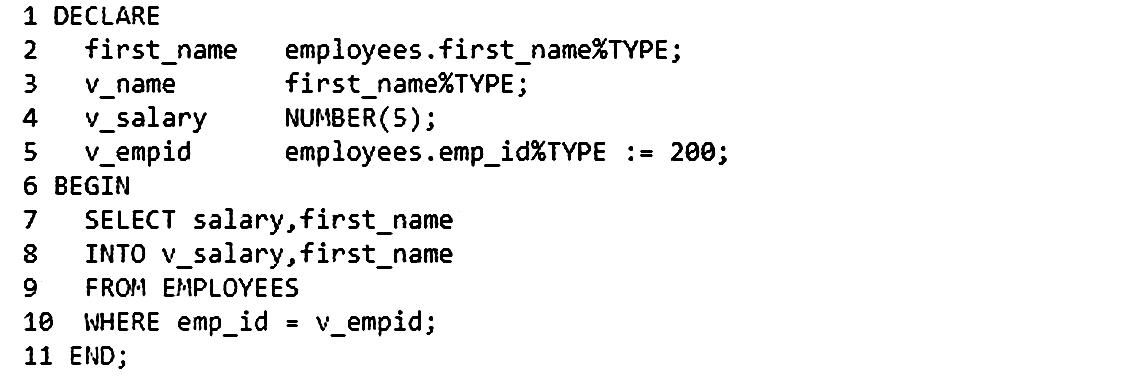
- It will execute successfully provided the salary of EMP_ID 200 does not exceed the value 99999.
- It will return an error at line 2.
- It will return an error at line 3.
- It will return an error at line 8.
- It will execute successfully by rounding up the salary of EMP_ID 200 to the appropriate value.
Answer: A
Want the full bank of 88 questions for 1z0-149? See all practice exams.